Enterprise AI Use Case Planning Guide
Summary
This page converts the three source visuals into an enterprise planning narrative that teams can execute in workshops and steering reviews. It shows how a business objective becomes architecture, governance, and rollout decisions.
Use this when you need a common planning artifact for leadership reviews, architecture workshops, and portfolio prioritization without turning the conversation into a slide deck of labels.
Why This Matters
- Teams often choose tools before defining business outcomes and control needs.
- Structured use-case planning reduces rework between business and engineering teams.
- A common planning guide improves decision speed across architecture, risk, and delivery.
Core Concepts
- Outcome-first design: define business KPI before technical pattern choice.
- Baseline-to-target mapping: separate current-state constraints from target-state architecture.
- Control-aware execution: policy, security, and audit requirements are design inputs.
- Decision traceability: every use-case decision maps to an owner and measurable result.
Realistic Example
A banking platform identified fraud triage as its first enterprise AI use case. Using this guide, the team mapped business KPIs to data and control requirements, selected a RAG pattern with policy enforcement, and launched a phased rollout. In 10 weeks, manual triage time decreased by 24% while audit evidence retrieval improved from days to hours.
Diagram
Executive Summary View
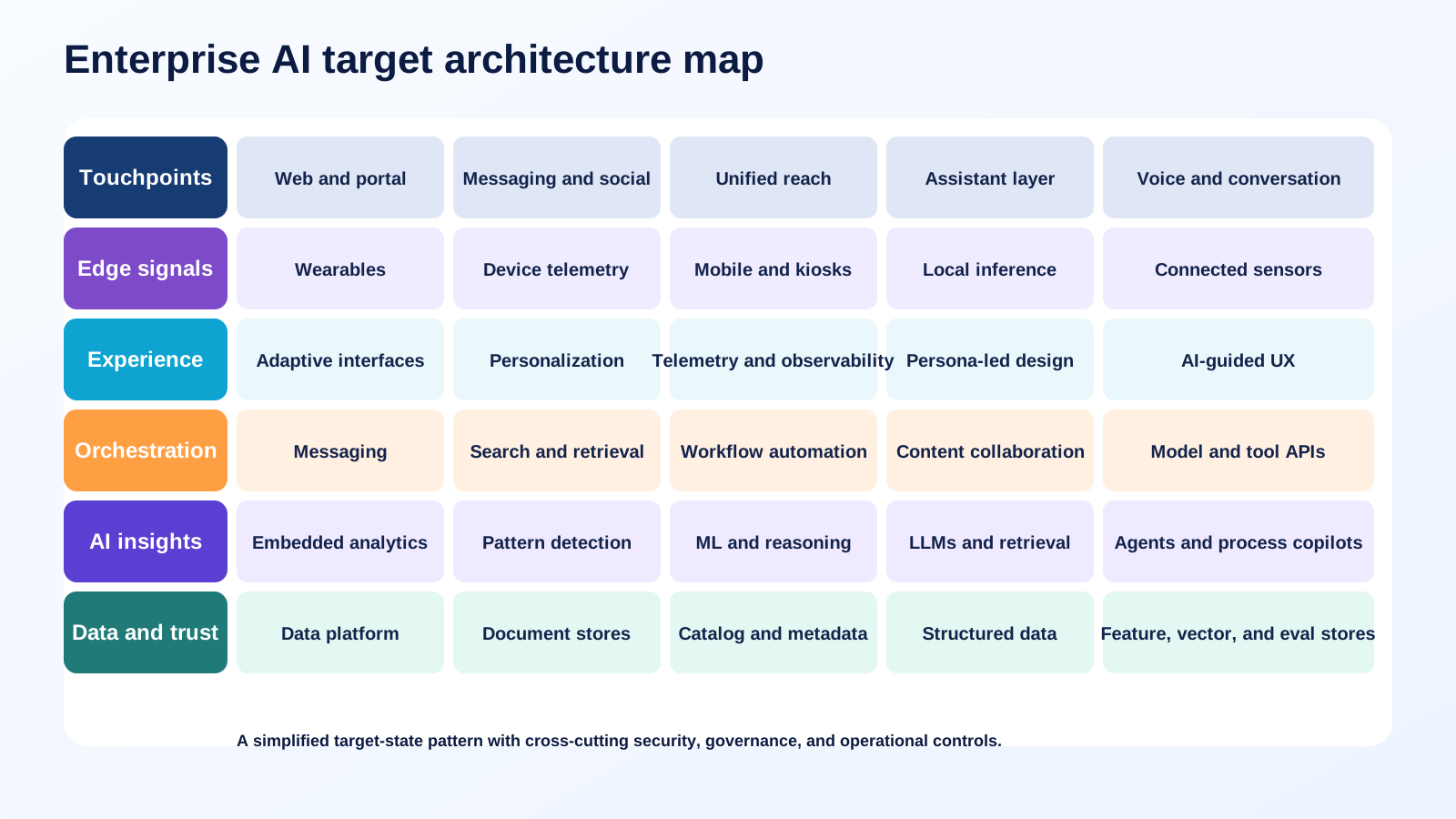
Platform vision
A target architecture view of channels, orchestration, AI insights, data foundations, and trust controls.
Best for: executive alignment and roadmap framing.
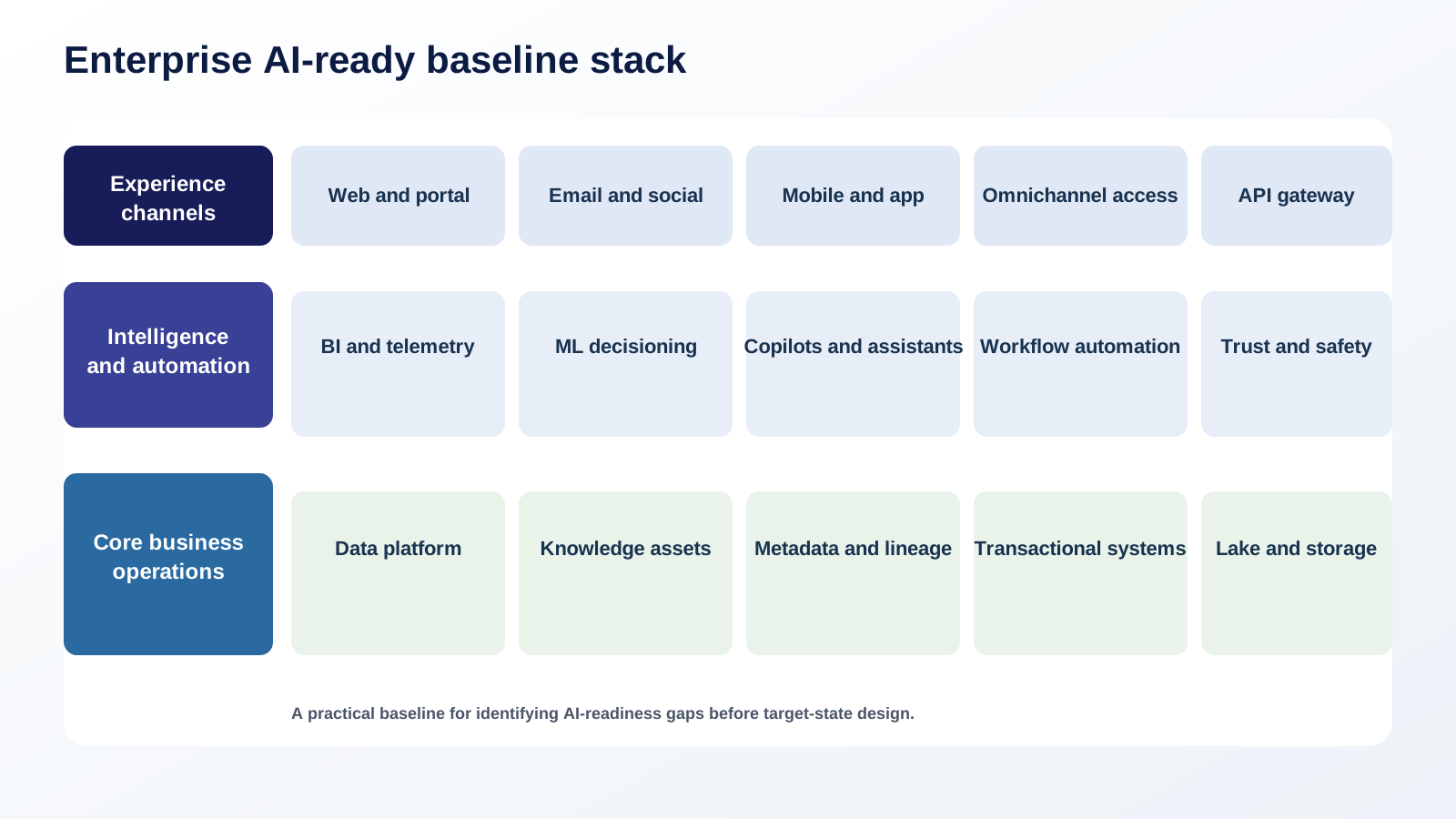
AI-ready baseline lens
A practical baseline stack organized around experience channels, intelligence and automation, and core operations.
Best for: readiness assessment and modernization sequencing.
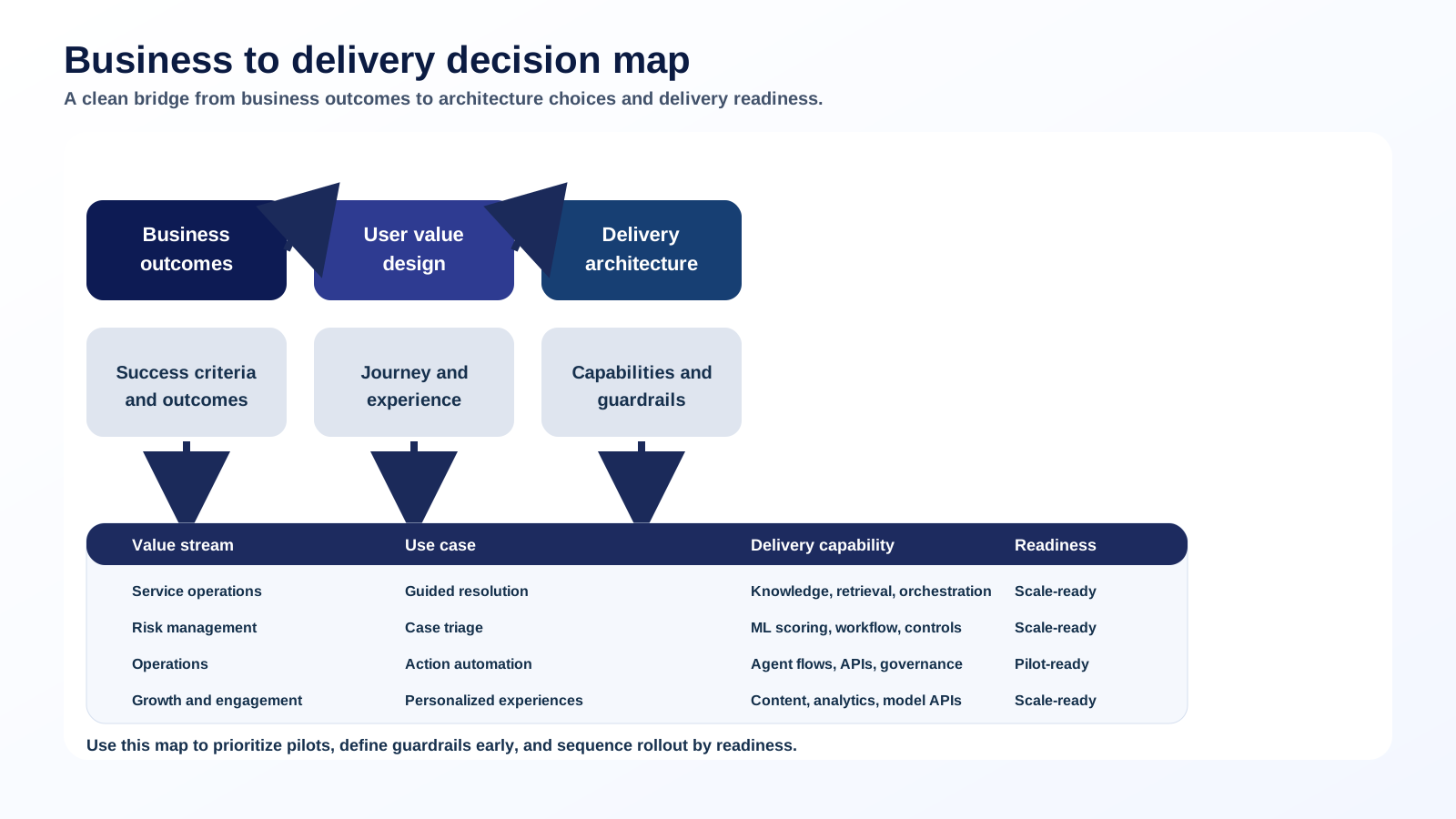
Decision bridge
A decision path from business outcomes to user value, architecture guardrails, and delivery readiness.
Best for: workshops, prioritization, and rollout sequencing.
Created Reference Images
Implementation Steps
- Define one high-impact business use case and explicit KPI baseline.
- Use the baseline stack visual to identify capability and dependency gaps.
- Select architecture pattern and governance controls using the decision bridge.
- Document rollout gates for quality, policy, and operating readiness.
- Run a phased pilot and capture evidence for scale approval.
What To Reuse
- A staged flow from business value to technical architecture
- The separation between conceptual, logical, and implementation layers
- The idea that AI use cases should be mapped to platform capabilities, not treated as isolated features
- The enterprise framing around governance, security, privacy, and operating model alignment
How To Read The Three References
1. Platform vision
Read this as the destination: the scope a modern AI-enabled platform should cover.
Question answered: What should the end-state platform cover?
2. AI-ready baseline stack
Read this as the grounded baseline architecture used to identify capability gaps and dependencies.
Question answered: What must be improved first to become AI ready?
3. Business-to-delivery bridge
Read this as the decision path that connects business intent to technical delivery choices.
Question answered: How do we translate a business need into a design?
Senior Tech vs Dev Conversation
Senior Tech: Why not skip the baseline stack and go directly to target architecture? Dev: Because target design without current constraints causes unrealistic plans and delayed delivery. Senior Tech: What is the key output of this planning guide? Dev: A decision map tying business KPI, architecture pattern, controls, and rollout gates.
UX/UI Checklist
- Keep one visual per planning question: target, baseline, and decision bridge.
- Show KPI baseline and target beside each candidate use case.
- Label dependencies and risk controls directly on planning views.
- Make ownership and next review date visible on each decision card.
What To Normalize
- Use one spelling for each concept across the page, such as AI, API, email, omnichannel, and IoT
- Replace placeholder text like <Client> with the real audience or company name
- Reduce repeated labels where the same meaning appears in multiple boxes
- Simplify dense capability matrices into a few high-signal categories
Recommended Reference Structure
- Business objective and outcome
- Data, signals, and processing needs
- Model, agent, and orchestration choices
- Hosting, security, and infrastructure requirements
- Governance, operations, and measurement
Suggested Narrative
The story should read left to right: outcome first, design second, implementation last.
Use As References For
Strategy decks
Use the summary blocks and decision flow to frame AI as an operating model and platform topic, not just a model discussion.
Architecture workshops
Use the bridge between business intent and capabilities to decide what must be designed before implementation begins.
Roadmap discussions
Use the target-state view to sequence platform changes across data, model, application, and governance layers.
Capability mapping
Use the reference images as input for business and technology capability maps that stay aligned.
Common Pitfalls
- Final production slide art without cleanup
- A direct technical design without validation
- A dense capability matrix without audience-specific simplification
References and Next Steps
- Continue with Enterprise Adoption and CIO Strategy for executive-level sequencing.
- Then read Enterprise AI Landscape to align capability maturity and operating controls.
- If you turn this into a deck, use one headline, one flow diagram, and one simplified capability matrix.